Lurie Backs Federal Bill to Tighten Emergency Rules for Waymo and Other Robotaxis
San Francisco's mayor is supporting Rep. Kevin Mullin's proposal to require autonomous vehicle companies to meet minimum emergency-response standards after robotaxi breakdowns during the July 4 fireworks and a December blackout.
By Mei Ling ·
San Francisco Mayor Daniel Lurie is urging stronger federal oversight of self-driving cars, saying a series of high-profile robotaxi failures has exposed gaps in how California regulates the rapidly growing industry.
Lurie plans to support legislation from Rep. Kevin Mullin, a Democrat whose district includes parts of San Francisco and San Mateo County. The bill is aimed at improving how Waymo vehicles and other robotaxis work with first responders. Earlier this month, Lurie also sent a letter to state officials asking for tougher robotaxi rules.
The Autonomous Vehicle Emergency Response Coordination Act would require companies to show they have core operational capabilities before expanding service. Those include clearing disabled vehicles from traffic lanes and changing routes in real time during emergencies. The measure would also set up a 24-hour hotline so officials can reach AV companies while handling incidents.
In addition, companies would have to create and share an emergency response plan, along with a process for geofencing, which keeps vehicles out of areas affected by an active emergency or hazard.
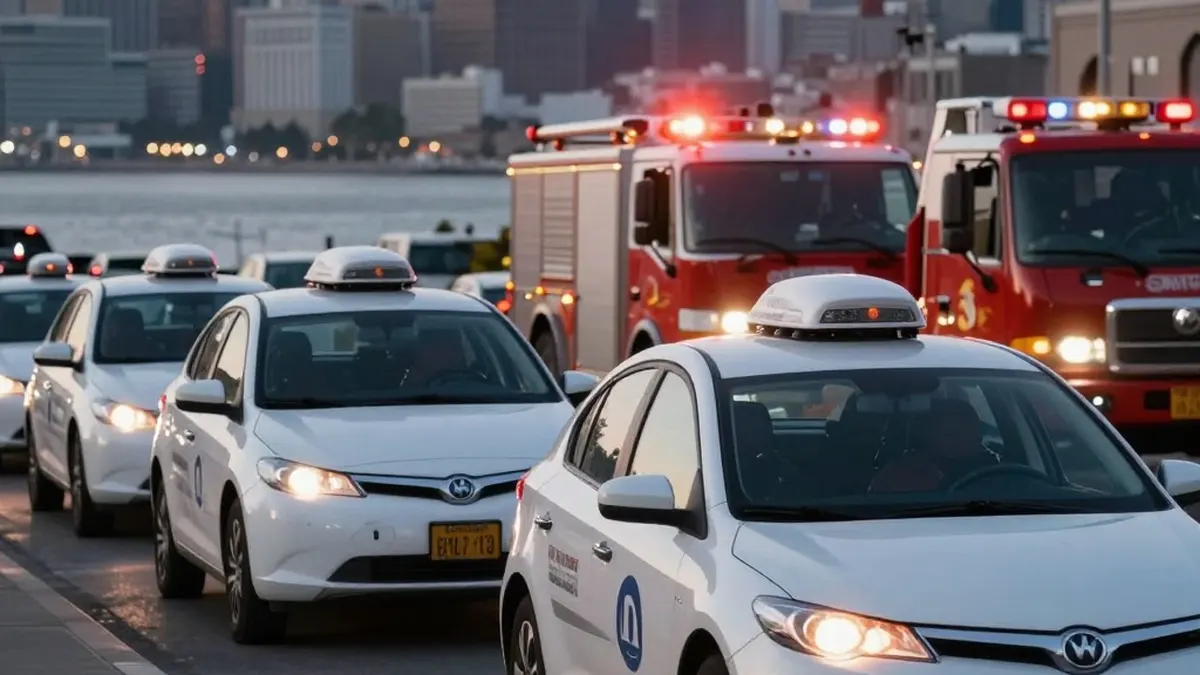
Waymo's problems during the July 4 fireworks display and the December citywide power outage have embarrassed the company and frustrated residents. During the Fourth of July celebration, which drew more than 100,000 people to the waterfront, dozens of Waymo vehicles were stuck in gridlock. Some ran out of power and blocked key streets. A similar breakdown happened during the December outage.
San Francisco Fire Department records obtained by The Standard show repeated cases of Waymos blocking fire trucks and paramedics and slowing emergency response. In July, Jonathan Morrison, administrator of the National Highway Traffic Safety Administration, wrote to robotaxi companies that the agency had "identified a clear pattern of driverless AVs interfering with law enforcement and other first responders."
"San Francisco wants AVs on our streets, and we want them to be here safely," Lurie said Tuesday. In a statement, he said the city, as one of the first to welcome autonomous vehicles at scale, has learned more than almost any other about how they perform in a dense urban setting, and that the bill would help share those lessons nationally. Mullin said at a Tuesday press conference that the measure puts "the onus on AV companies themselves to meet minimum standards on safety."
San Francisco Fire Chief Dean Crispen and Cathy Chase, president of Advocates for Highway and Auto Safety, have also endorsed the bill. Waymo said it welcomes the effort. Tiffany Moore, the company's head of federal policy and government affairs, said Waymo has long backed a federal framework and supports standardizing how AV developers engage with first responders, which she said would give the industry and public safety agencies consistent guidelines.
California already has some comparable rules. This year, the state DMV adopted regulations requiring annual first responder interaction plans, letting emergency responders manually override vehicles, requiring compliance with geofencing directives, and obliging companies to answer responder queries within 30 seconds. Companies must also clear permitting by both the DMV and the Public Utilities Commission, a stricter process than in Texas, Arizona and other states. Six companies currently hold permits in California to test driverless vehicles without a human safety operator.
Source: The San Francisco Standard