Trump pushes for AI data centers to return energy benefits to local grids
The President is asking major tech firms to share excess power with nearby towns to reduce electricity bills and win public support.
By Marcus Johnson ·
President Donald Trump has issued a new directive calling for artificial intelligence data centers to provide a financial or energy dividend to the communities that host them. This move aims to offset rising utility bills and make these massive facilities more acceptable to local residents. The President outlined this plan in a post on Truth Social, urging builders to not only generate their own electricity but to also feed surplus power back into the local grid.
The primary goal of this initiative is to prevent price hikes or even drive down costs for households near these facilities. By mandating that data centers share their excess energy, the administration hopes to address a major pain point for small towns. This approach seeks to turn a source of local resentment into a source of community benefit.
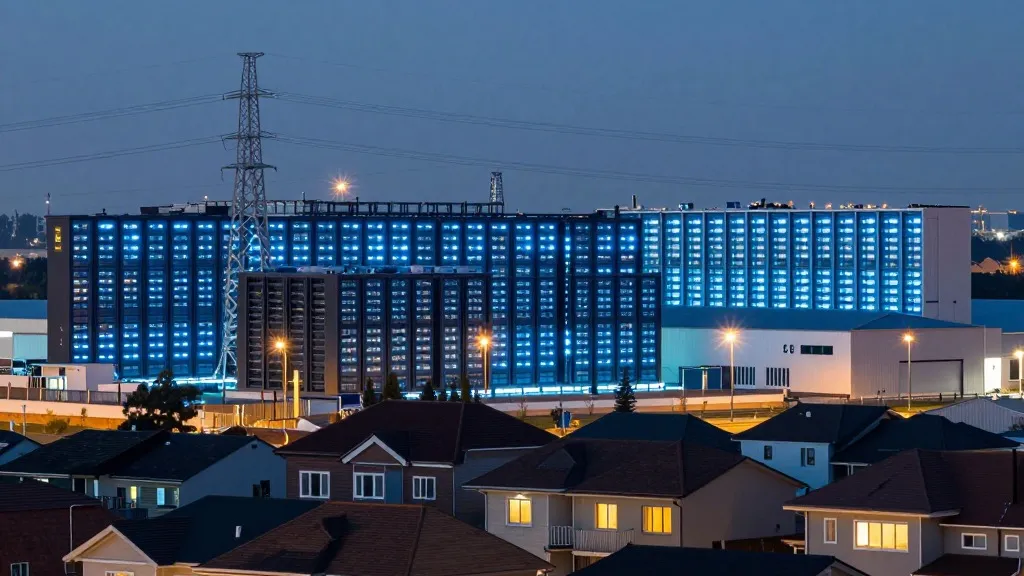
Local opposition to AI data centers has been growing across the United States. Residents frequently protest due to the significant impact these facilities have on their daily lives. Common complaints include increased electricity rates, constant noise pollution, and strain on local water supplies. Additionally, issues such as air pollution and deforestation have made these projects a difficult sell for many municipalities.
The Trump administration views this energy dividend as a way to regain favor with the public while staying ahead of China in the AI race. The strategy is simple: if large companies pay something back to the affected areas, their presence becomes more palatable. The dividend could take the form of partially covering rising electricity costs, which directly impacts many homes in the vicinity of these data centers.
This new demand builds on previous orders from the administration. Companies were already required to produce their own electricity rather than relying solely on the public grid. A recently passed act also requires data centers to pay for grid upgrades themselves. This ensures that local taxes are not used to fund the infrastructure needed to support these high-energy facilities.
Trump emphasized the practical benefits of these arrangements in his post. He noted that data centers that were initially unpopular in certain areas became extremely popular once a financial deal was struck. The President closed his message with a direct instruction to stakeholders: make deals and get them built. This highlights the administration's desire to accelerate construction while smoothing over local friction.
However, the effectiveness of these dividends remains to be seen. While the economic aspect addresses one facet of the problem, it does not solve all community concerns. Enormous water consumption, ecological damage, and pollution remain major challenges. These factors continue to make AI data centers a tough sell in many locations regardless of any financial incentives.
The term dividend also raises questions about corporate profitability. Companies typically pay dividends only when they are in the black. New data center builds are often in the red for a period while they recoup initial construction costs. Furthermore, the short-term power generation used by many of these facilities relies on gas-powered generators. These systems can be noisy and polluting, which may not be an ideal outcome for nearby residents.
Critics argue that without strict requirements, companies may simply say what is needed while doing what they want. The lack of binding mandates could mean that these benefits remain a gesture rather than a concrete change. The choice of words suggests a benefit that may not materialize if companies are not forced to prioritize community needs over their own operational ease.
Looking ahead, the practical implementation of this plan will be the real test. If data centers can successfully integrate their energy systems with local grids, it could set a new standard for large-scale tech infrastructure. However, if the financial gains are not substantial enough to offset the environmental and social costs, local resistance may persist. The next few months will reveal whether this energy dividend is a meaningful solution or just another step in a complex negotiation.
Source: Tom's Hardware